What Is an Immersive Experience Centre? Benefits for B2B Brands
In modern corporate business-to-business marketing, standard PowerPoint slides and one-way presentation speeches rarely convince enterprise buying committees. High-value business clients need to evaluate complex software, enterprise automation, and cloud ecosystems thoroughly before investing capital.
To solve this, forward-looking technology firms like ViitorX design physical and digital briefing environments where clients can interact with systems directly. An immersive experience centre transforms abstract concepts into tangible demonstrations, allowing prospective buyers to experience how a solution operates rather than merely reading about its features.
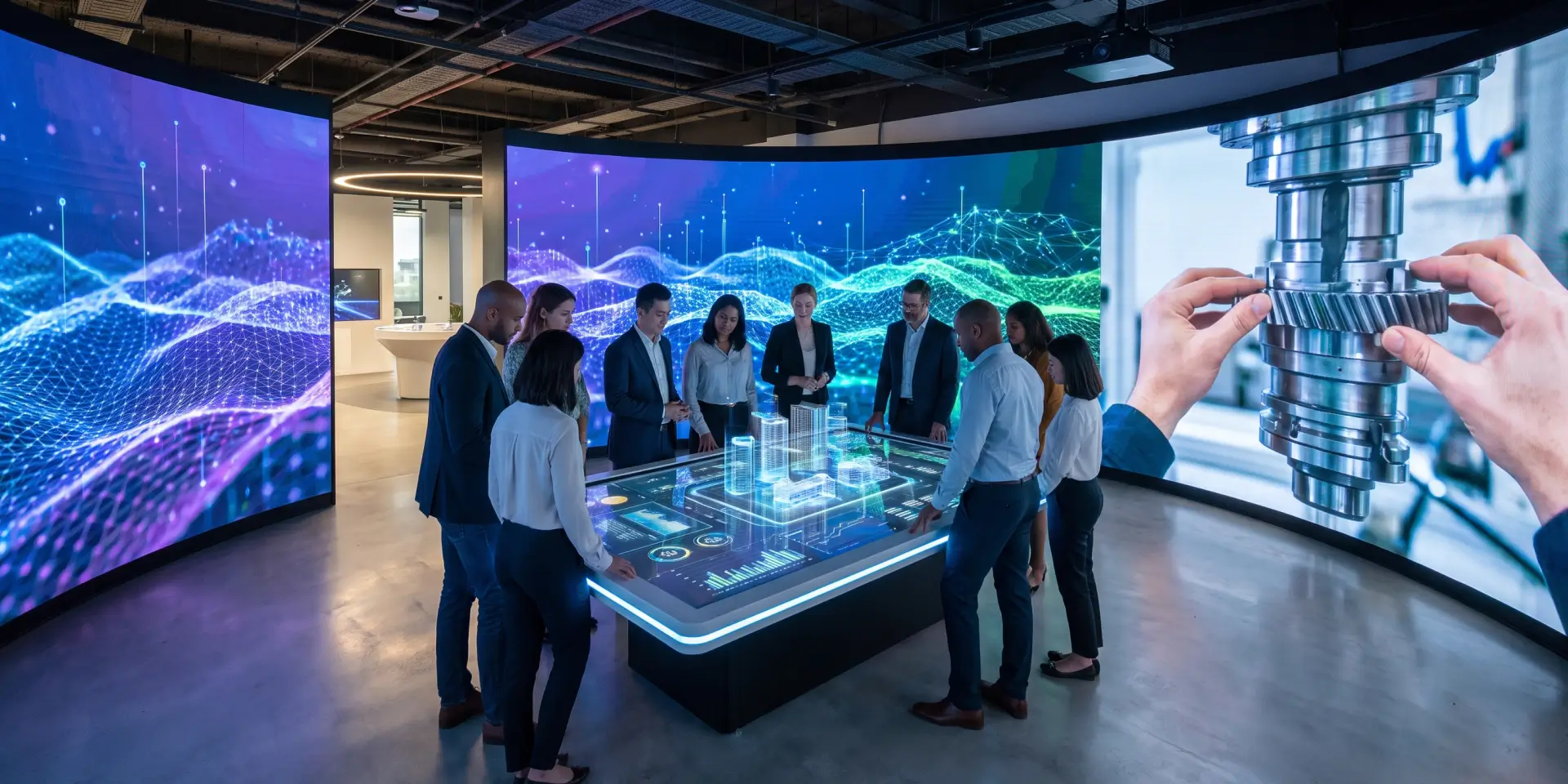
Defining the Modern Immersive Center and Immersive Technology
At its foundation, an immersive experience centre is a purpose-built architectural space combining software, spatial audio, smart physical props, and visual displays. Instead of functioning as a passive corporate showroom, the environment responds dynamically to the people inside it.
The integration of modern immersive technology “https://viitorx.com/blog/what-is-an-immersive-experience-centre-benefits/” serves as the primary driver behind this transformation:
- Interactive Surface Displays: Smart touch tables and tactile control consoles allow executives to explore supply chain logistics, cloud networks, and financial projections through direct physical touch.
- Spatial Audio and Directional Sound: Sound zones isolate specific audio narrations to small visitor groups, ensuring diverse stakeholder discussions occur without auditory clutter.
- Real-Time Digital Twin Dashboards: The space pulls live operational data from manufacturing plants or remote servers, showing real-time telemetry instead of simulated mockups.
- Responsive Visual Environments: Multi-sided ultra-high-definition projection walls adapt layouts instantly based on the visiting industry profile.
Strategic Value of Experience Center Design for Enterprise Deals
Closing high-value contracts often involves cross-functional stakeholders with differing priorities. Technical leaders examine security and system performance, while financial buyers focus on risk reduction and total return on investment.
Applying strategic experience center design turns these differing perspectives into mutual understanding through practical interaction:
- Compressing Evaluation Timelines: Enterprise technical assessments that usually require weeks of back-and-forth documentation can be demonstrated, stress-tested, and verified live in a single collaborative session.
- Building Objective Consensus: Cross-functional decision-makers evaluate data flows simultaneously in the same room, ensuring both technical and commercial questions are resolved in real time.
- Strengthening Brand Credibility: Welcoming enterprise clients into an orchestrated technology center provides clear proof of technical capability, creating a strong distinction from competitors using basic slide decks.
- Facilitating Live Co-Creation: Rather than pitching fixed service catalogs, the facility acts as a digital sandbox where clients configure deployment scopes and project roadmaps on site.
What Commercial Spaces Adopt from Modern Museum Design
Public cultural institutions and science museums have spent decades refining techniques to guide large groups through complex information without causing cognitive overload.
High-performing corporate briefing facilities now apply core lessons from contemporary museum design to keep visitors engaged and focused:
1. Curated Spatial Journey Mapping
Visitors move through an intentional narrative arc:
- The Context Area: A welcoming zone introducing macro industry challenges and common operational pain points.
- The Deep-Dive Core: A focused interactive space where visitors test technical architectures and live software solutions.
- The Collaboration Suite: An executive meeting room built for discussing commercial terms, pilot programs, and implementation timelines.
2. Physical and Digital Convergence
Just as modern museums balance rare physical artifacts with interactive digital touchscreens, enterprise spaces balance physical hardware with digital overlays. Transparent display vitrines allow visitors to view physical machinery components while interacting with digital diagnostic readouts on the glass surface.
Workforce Capability Building Through Immersive VR & 3D Simulation Learning
Beyond direct client sales meetings, an experience centre serves as an advanced operational testing ground for internal employee onboarding, technical upskilling, and crisis readiness.
Integrating Immersive VR & 3D Simulation Learning provides significant organizational advantages:
- Zero-Risk Machine Maintenance Drills: Technicians practice high-voltage electrical repairs, turbine servicing, and robotic line maintenance within 1:1 digital models, eliminating equipment damage risks.
- Active Muscle Memory Development: Repeating spatial procedures in virtual environments builds stronger behavioral habits than reading technical safety handbooks or watching video guides.
- Coordinated Crisis Simulation: Distributed teams run joint emergency procedures for industrial leaks, power disruptions, or equipment failures inside shared multi-user digital spaces.
- Automated Competency Tracking: Simulation software automatically logs operator reaction times, procedural accuracy, and mistake patterns, providing clear performance analytics for regulatory compliance.
Key Functional Zones of an Enterprise Experience Facility
Building an impactful corporate briefing space requires organizing the floor plan into clearly defined zones:
- Zone 1: The Context and Orientation Gallery
- Core Objective: Welcome visiting executives and frame relevant industry challenges.
- Technology Setup: Seamless ultra-fine pitch LED walls, ambient acoustic soundscapes, and digital timelines.
- Visitor Takeaway: Establishes shared understanding of industry challenges before product discussions begin.
- Zone 2: The Interactive Sandbox Lab
- Core Objective: Deliver hands-on validation of software architecture and system interfaces.
- Technology Setup: Multi-user smart tables, object-recognition pucks, and sandboxed test environments.
- Visitor Takeaway: Technical leaders run custom queries and test platform integration directly.
- Zone 3: The 360-Degree Immersion Room
- Core Objective: Illustrate enterprise-wide impact through large-scale visual operational workflows.
- Technology Setup: Curved panoramic projection mapping, live data telemetry feeds, and interactive floor sensors.
- Visitor Takeaway: C-suite executives observe how end-to-end automation improves operational efficiency.
- Zone 4: The Executive Decision Lounge
- Core Objective: Transition demonstrated value into agreed project milestones.
- Technology Setup: Integrated digital whiteboards, hybrid telepresence displays, and instant documentation export tools.
- Visitor Takeaway: Buyers and solution architects confirm pilot parameters and rollout timelines before leaving.
Measuring Tangible Commercial Return on Investment
Constructing a dedicated facility requires substantial capital investment. To validate the business case, forward-thinking enterprises evaluate return on investment across specific commercial metrics:
- Deal Velocity Acceleration: Tracking how many calendar days are saved from initial lead qualification to final contract signing when clients visit the facility.
- Average Deal Value Growth: Measuring contract expansion resulting from multi-product ecosystem demonstrations compared to standard proposal documents.
- Executive Attendance Ratio: Monitoring the proportion of C-level executives and vice presidents attending sessions versus exploratory meetings with mid-level managers.
- Post-Visit Close Rates: Comparing win-loss ratios of pipeline accounts that completed experiential walkthroughs against those managed via remote video calls.
Partnering with established spatial technology developers like ViitorX allows enterprises to integrate reliable spatial hardware, real-time visual software, and enterprise data security into a cohesive space that supports long-term commercial growth.
Building a Space for Long-Term Business Impact
An immersive experience centre is much more than an impressive visual showroom. When planned with clear business objectives, it becomes a powerful commercial platform that clarifies technical complexity, builds trust among diverse corporate buyers, and accelerates enterprise sales pipelines.
By combining strategic experience center design, structured narrative techniques derived from modern museum design, and practical Immersive VR & 3D Simulation Learning, B2B organizations can turn complex technology offerings into clear, compelling, and actionable business solutions.