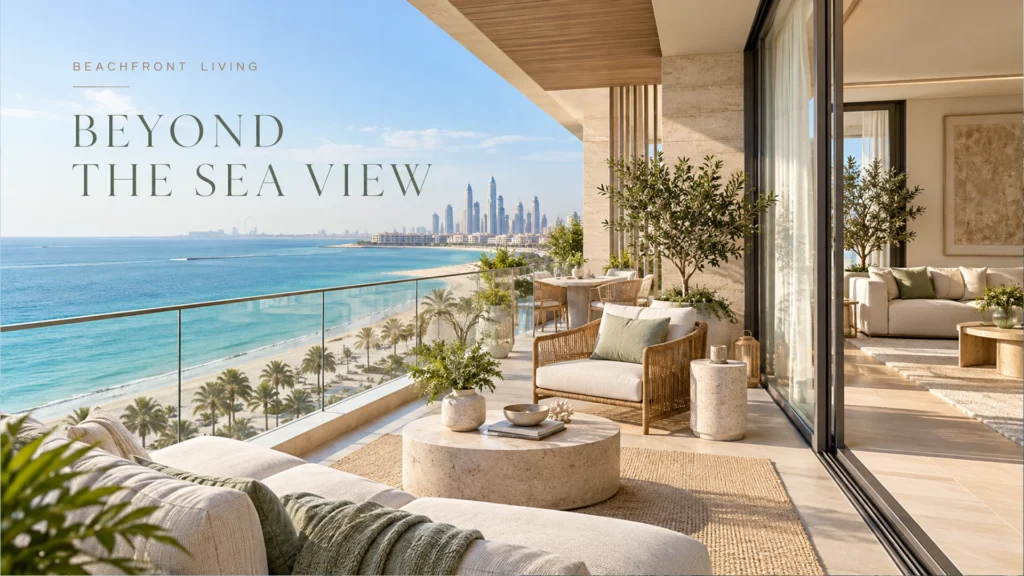
Floor-to-ceiling glass and a perfect sea horizon can sell the dream. What determines whether residents still love the property several years later is far less glamorous: shade, storage, privacy, materials, access and a floor plan that works on ordinary days.
Beachfront property photographs exceptionally well.
The sea provides colour, depth and natural light. Balconies appear more generous when they open towards a horizon, and even simple interiors can feel more dramatic when blue water fills the background.
That visual appeal is one of the reasons waterfront real estate remains powerful across international property markets.
But a photogenic coastal apartment and a genuinely livable beachfront residence are not always the same thing.
Livable beachfront real estate combines genuine access to the coastal setting with practical apartment planning, usable outdoor space, privacy, shade, durable materials, storage, reliable building management and convenient everyday services. The sea should improve daily life rather than distract buyers from weaknesses in the property itself.
The View Is Only One Part of the Coastal Experience
A buyer can experience the sea in several ways.
It may be:
- Visible from the living room
- Visible from bedrooms
- Experienced from a balcony
- Reached directly from the building
- Part of a promenade used every day
These are different benefits.
A strong beachfront development understands the distinction.
A coastal home becomes more valuable as a place to live when the water influences how residents spend their day, not merely what appears behind them in photographs.
1. The Apartment Layout Still Comes First
The sea cannot correct an inefficient floor plan.
Residents still need:
- Comfortable bedrooms
- Practical living areas
- Storage
- A functioning kitchen
- Privacy
- Logical circulation
One of the simplest tests is to look at the floor plan without the rendered view.
Would the apartment still appear thoughtfully designed?
If the answer is no, the property may be relying too heavily on its location.
2. Furniture Should Work With the View
Coastal apartments can create unusual furniture problems.
Large areas of glazing reduce the number of solid walls available for:
- Televisions
- Storage
- Artwork
- Furniture
A poorly planned residence may force the sofa to face away from the sea or place a media wall in front of the best glazing.
Good planning considers these decisions from the beginning.
3. Balconies Need Enough Depth to Be Useful
A balcony can add significant lifestyle value to a beachfront home.
But advertised outdoor area does not automatically mean usable outdoor area.
Check whether it can actually accommodate:
- Seating
- A small table
- Movement
- Plants if desired
without becoming cramped.
Depth is often more important than total length.
4. Shade Matters in the UAE
An outdoor area exposed to intense sun for much of the day may be less usable than it appears in a morning rendering.
Buyers should understand:
- Orientation
- Balcony overhangs
- Building shading
- Glazing exposure
- How sunlight changes through the day
This is not an argument against sunny apartments.
It is an argument for understanding how the home behaves in the UAE climate rather than judging it at one ideal time of day.
5. Privacy Becomes More Complicated Around Resort Amenities
Beachfront developments often combine homes with:
- Swimming pools
- Promenades
- Restaurants
- Beach areas
- Hotel-style amenities
That activity can create a lively residential environment.
It can also affect privacy.
Lower-floor buyers should assess whether their windows or balconies face:
- Busy recreation areas
- Neighbouring terraces
- Public walkways
- Restaurants
For some residents that energy is attractive.
Others will prefer a more protected orientation.
6. Direct Beach Access Needs to Be Understood Precisely
The words “beachfront” and “near the beach” should not be treated as identical.
Buyers should ask:
- Where is the beach access point?
- How long does it take to walk there?
- Is access associated with the residence?
- Are changing or shower facilities available?
- What rules apply?
The answer determines whether going to the beach feels like part of everyday life or a separate outing.
7. Coastal Materials Need to Be Selected for Coastal Conditions
Sea air, humidity, sunlight and wind can place additional demands on exposed building elements.
Material specification matters for:
- Metalwork
- Glazing
- Balcony fittings
- Outdoor furniture
- Sealants
- Exterior finishes
Luxury coastal property should therefore be judged not merely by how expensive the materials appear, but by whether they are appropriate for the environment.
8. Maintenance Is Part of Beachfront Living
Windows facing the sea may require regular cleaning.
Balconies collect outdoor debris.
Exterior surfaces are continually exposed.
A livable development needs an organised approach to:
- Façade maintenance
- Common-area cleaning
- Pool maintenance
- Landscaping
- Beach-related areas
- Building systems
Building management therefore becomes part of residential quality.
9. Service Charges Need to Match the Lifestyle Being Delivered
A resort-style beachfront development may operate more shared infrastructure than a simple residential building.
This can include:
- Pools
- Wellness areas
- Landscaping
- Resident lounges
- Beach facilities
- Security
Buyers should understand the ongoing cost of maintaining that environment.
The cheapest service charge is not automatically desirable if it cannot support the quality expected from the development.
10. Storage Becomes Important Surprisingly Quickly
Coastal marketing naturally focuses on open space.
Residents also need somewhere for:
- Luggage
- Beach equipment
- Shoes
- Cleaning equipment
- Seasonal items
- Household supplies
Second-home owners may want additional secure storage for belongings left behind between visits.
A beautiful apartment without adequate storage can quickly begin to feel cluttered.
11. Kitchens Still Need to Support Real Living
A resort-like setting does not mean residents eat in restaurants every day.
A functional kitchen needs appropriate:
- Worktop space
- Cabinetry
- Appliances
- Ventilation
- Dining relationship
This becomes even more important for families and long-term residents.
12. The Building Needs to Work When It Is Busy
Beachfront developments can become more active on weekends and holidays.
Buyers should consider:
- Lift capacity
- Parking
- Visitor access
- Pool crowding
- Beach access
- Security
A development can feel exceptional during a private viewing and rather different when fully occupied.
13. Connectivity Still Matters
Residents do not spend every day inside the development.
A beachfront home should still have reasonable access to:
- Road networks
- Supermarkets
- Healthcare
- Restaurants
- Schools where relevant
- Airports
This is one reason destination planning matters as much as individual building design.
14. A Resort Destination Needs Everyday Life Too
Destinations such as Al Marjan Island combine hospitality and residential growth with waterfront spaces and leisure infrastructure.
Marjan’s current masterplan includes 23 kilometres of waterfront and 7.8 kilometres of beaches, but also promenades, recreation and a substantial planned residential population.
This wider mix is important.
A livable coastal destination needs people to have reasons to remain there after the weekend ends.
15. Fully Furnished Homes Can Improve Coastal Usability
A furnished residence can be particularly convenient for:
- Overseas owners
- Second-home buyers
- Investors
- Residents relocating to the UAE
The strongest furnishing packages are designed around the architecture rather than added after the layout is finalised.
One current example is Soléva Beach Residences on Al Marjan Island, where Al Huzaifa Properties applies its furniture and interior-design heritage to fully furnished beachfront homes.
Its official project page describes tailored layouts, fully furnished residences, branded appliances and 50+ lifestyle and wellness amenities.
What Should Buyers Check Before Choosing Beachfront Property?
- Apartment layout
- Actual beach access
- View category
- Orientation and sunlight
- Balcony usability
- Privacy
- Materials
- Storage
- Building management
- Service charges
- Everyday connectivity
The sea remains important.
It simply belongs within a much larger decision.